18 Oct 2026
Seasonal Wildlife Adaptations in Northern Grassland Transition Zones
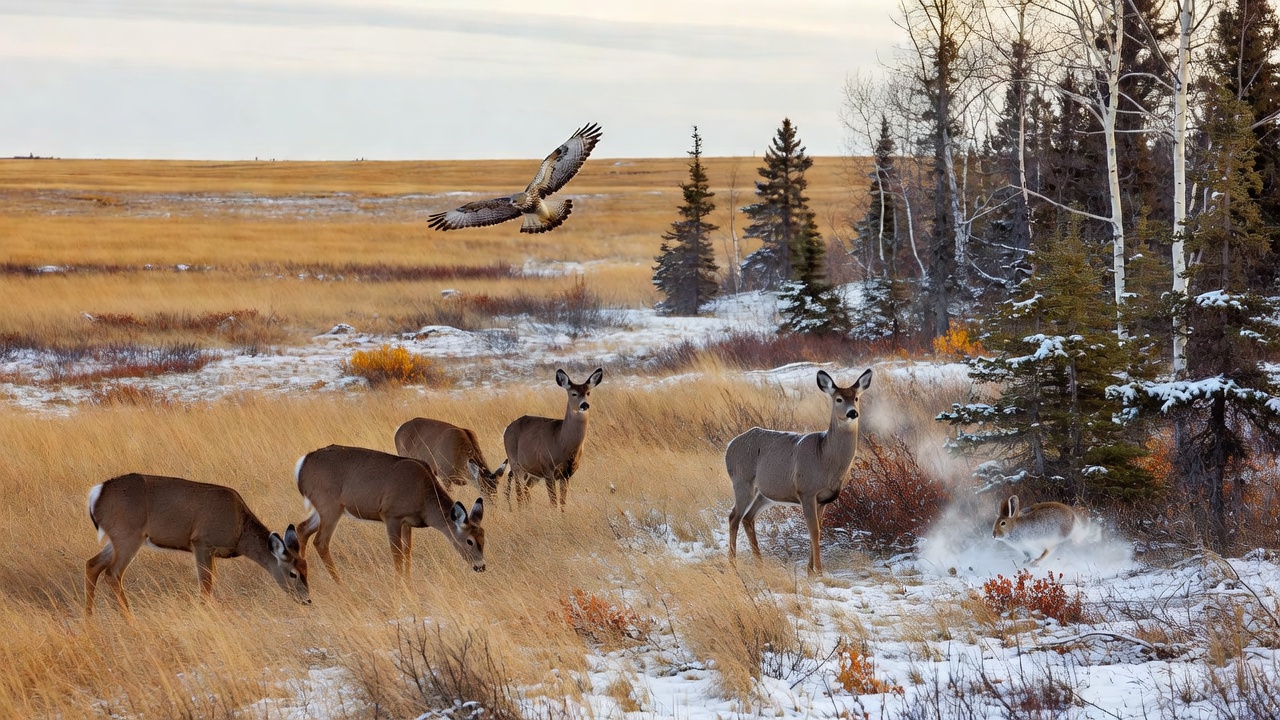
Northern grassland transition zones represent the shifting boundaries where open prairies meet boreal forests and aspen parklands across central Canada and the northern United States, and these regions host wildlife that adjusts behavior and physiology to four distinct seasons each year. Species ranging from ungulates to small mammals and migratory birds rely on predictable environmental cues such as temperature shifts, daylight changes, and vegetation cycles to time their movements and metabolic adjustments. Data from long-term monitoring programs indicate that these adaptations allow populations to exploit seasonal resources while minimizing energy expenditure during periods of scarcity.
Characteristics of the Transition Zones
Transition zones feature a mosaic of tallgrass remnants, shrub patches, and scattered tree stands that create microhabitats supporting diverse food webs, and researchers note that soil moisture gradients and periodic fires maintain this patchwork structure. Wildlife here encounters greater seasonal temperature swings than in either pure grassland or forest interiors, which drives specialized responses including altered foraging ranges and reproductive timing. Studies conducted by government agencies show that species densities often peak at these ecotones because they offer both cover and open foraging areas within short distances.
Spring Emergence and Breeding Cycles
As snow recedes in April and May, many resident mammals shed winter coats and expand home ranges to access new growth, while birds returning from southern wintering grounds establish territories using vocal displays that coincide with insect hatches. Larger herbivores such as elk and white-tailed deer shift from browsing woody plants to grazing on emerging forbs and grasses, and this dietary switch supports lactation in females and antler growth in males. Small mammals like ground squirrels end torpor and begin territorial defense, with litter sizes correlating directly to spring vegetation biomass according to field records maintained by Environment and Climate Change Canada.
Summer Foraging and Resource Accumulation
During peak summer months, transition zone wildlife focuses on rapid energy intake before autumn declines, and predators adjust hunting patterns to follow concentrated prey near water sources and ripening seed heads. Bison herds graze intensively on nutrient-rich grasses that reach maximum protein content in July, while songbirds raise multiple broods supported by abundant arthropods in the shrub layer. Observations compiled by the U.S. Fish and Wildlife Service document how certain rodent species cache seeds during this period, creating underground reserves that later sustain winter survival when surface food disappears.
Fall Transitions and October 2026 Patterns
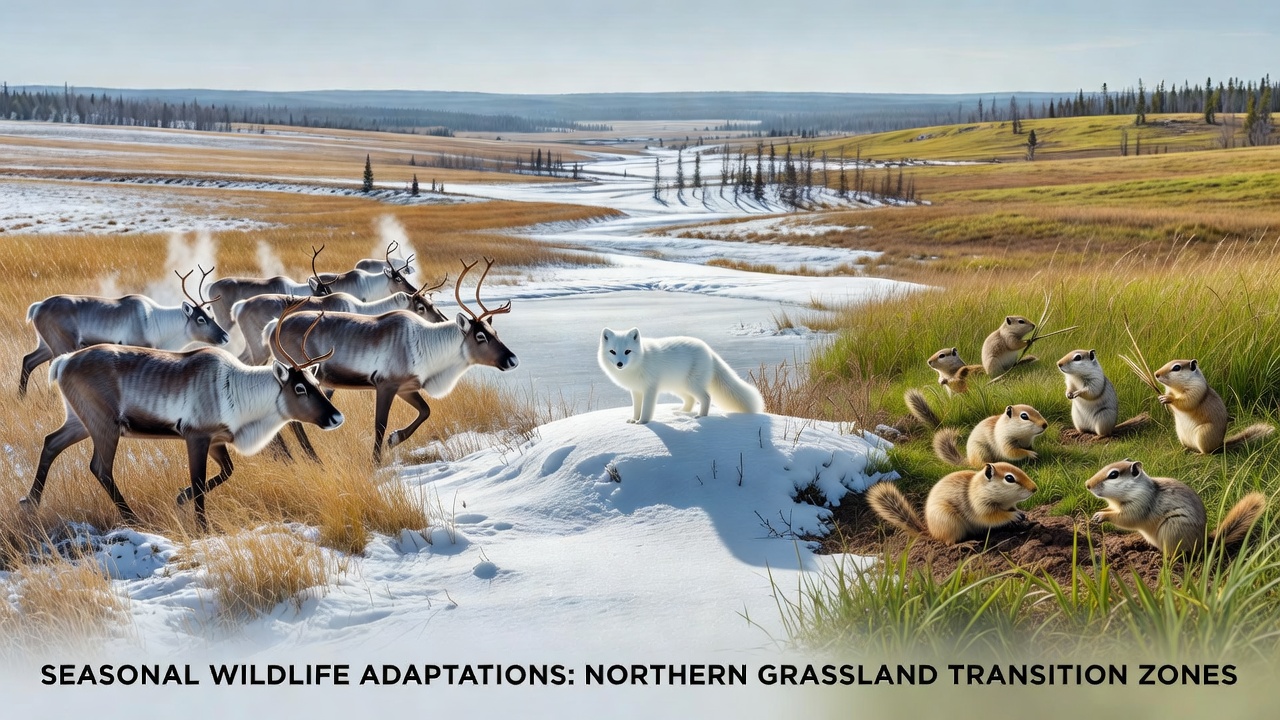
By September and into October, shortening daylight triggers physiological changes including fat deposition and migration preparation, and in October 2026 field crews across the aspen parkland corridor recorded earlier-than-average departures of sandhill cranes coinciding with an early frost event that reduced late-season insect availability. Ungulates develop thicker undercoats and males compete for mates using displays that require substantial energy reserves built during summer, while hibernating species such as badgers and bears increase caloric intake through berries and remaining prey. These coordinated responses ensure that populations enter winter with adequate reserves, and long-term datasets reveal that timing variations of just two weeks can influence overwinter survival rates in young animals.
Winter Survival Strategies
Once snow cover establishes, remaining residents shift to energy-conserving tactics that include reduced activity levels, use of insulated burrows, and selective foraging on persistent seeds or browse, and some birds form mixed-species flocks that improve predator detection in open landscapes. Species that do not migrate or hibernate lower their metabolic rates and rely on fat stores accumulated earlier, while wolves and foxes expand territories to track scattered ungulate herds that move to wind-swept ridges where snow depth remains manageable. Records maintained over decades indicate that deep snow years prompt greater use of conifer edges within the transition zone for thermal cover and easier travel.
Conclusion
Seasonal adaptations in northern grassland transition zones reflect integrated responses to climate, vegetation cycles, and predation pressures that have developed over generations, and continued monitoring by regional agencies provides baseline information for understanding how shifting weather patterns may alter these rhythms in coming decades. The interplay between resident and migratory species maintains ecological balance across the mosaic landscape, with each season presenting distinct challenges that wildlife meets through timed behavioral and physiological adjustments.